

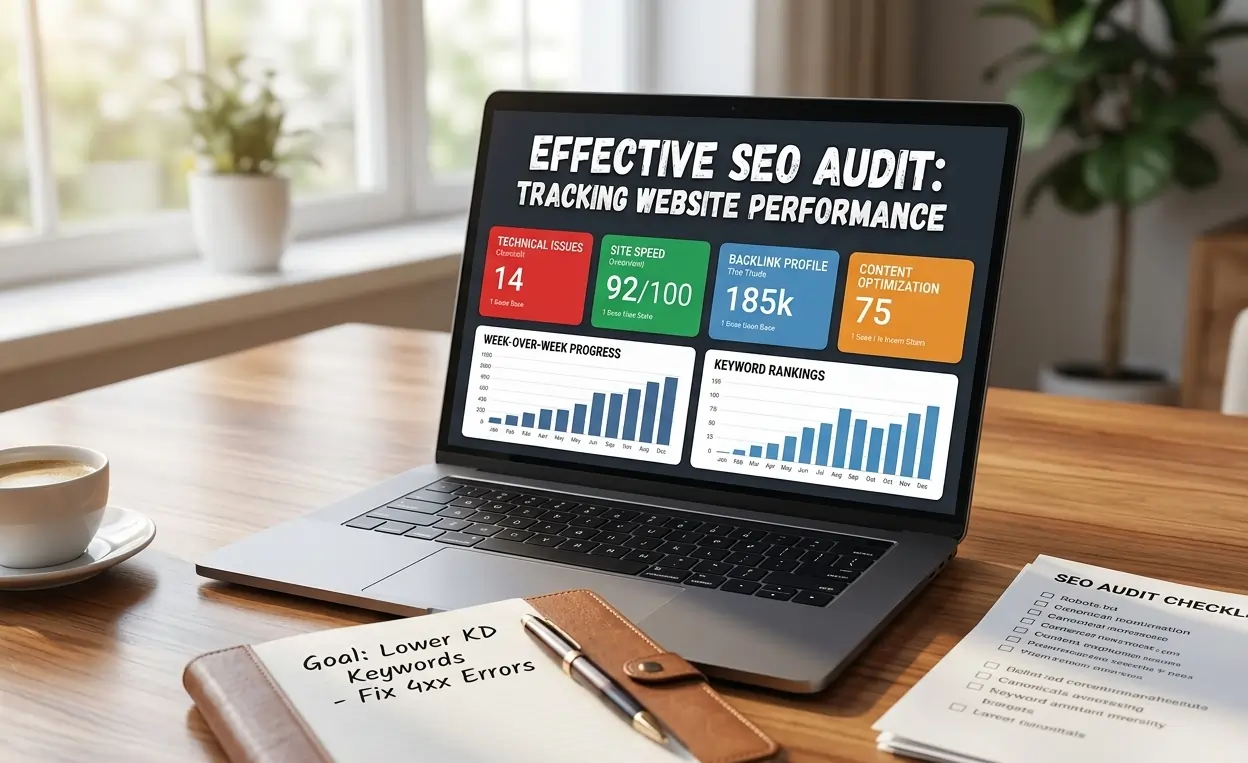
Tracking your SEO performance helps you understand how well your website is performing in search results. By monitoring key metrics like organic traffic, keyword rankings, and conversions using tools such as Google Analytics, Google Search Console, Ahrefs, and SEMrush, you can identify opportunities and fix issues. This enables you to make data-driven decisions, improve visibility, and achieve long-term growth.
Table of Contents
- Why Tracking Your SEO Performance Is Crucial
- Key SEO Metrics You Must Track
- Tools to Track and Measure SEO Performance
- How Often Should You Track SEO Performance?
- Turning SEO Data into Actionable Insights
- Common SEO Tracking Mistakes to Avoid
- FAQs About SEO Tracking
- Conclusion
Why Tracking Your SEO Performance Is Crucial
Monitoring your SEO performance is essential for sustainable business growth. Without tracking, businesses may miss opportunities to improve visibility, traffic, and conversions. If you’re new to optimization strategies, reviewing a Beginner’s Guide to SEO can help you understand the foundational concepts before diving into performance tracking.
What Can Go Wrong Without Proper SEO Tracking?
Failing to track SEO performance can lead to several issues that affect your website’s growth:
- Misaligned Content with User Intent: Publishing content that doesn’t match what users are searching for reduces engagement.
- Poor Keyword Targeting: Focusing on the wrong keywords may lower your rankings and traffic.
Low Engagement or High Bounce Rates: Without monitoring metrics, it’s difficult to identify pages that fail to retain visitors.
Key SEO Metrics You Must Track
Monitoring technical SEO metrics ensures that search engines can crawl, index, and rank your website effectively. Implementing structured data, improving site speed, and using advanced optimization techniques can enhance visibility. For additional guidance, you can discover ways to boost your site, providing practical tips to strengthen your technical SEO and overall website performance.

Organic Traffic
Organic traffic includes users who reach your website through non-paid search engine results. Monitoring organic traffic is crucial to understanding how your SEO efforts are performing and which strategies drive the most visitors.
Tracking organic traffic helps in:
- Identifying High-Performing Pages: See which content resonates with your audience and drives conversions.
- Monitoring Growth Over Time: Measure the impact of your SEO campaigns and overall website visibility.
You can further analyze traffic by:
- Segmenting by Source: Track visitors from Google, Bing, and Yahoo.
- Filtering Branded vs Non-Branded Queries: Understand which keywords are bringing visitors and refine your strategy accordingly.
Keyword Rankings
Monitoring keyword rankings is essential to understand your website’s visibility in search results and how it impacts clicks and traffic. Using tools like SEMrush, Ahrefs, and Google Search Console helps you track performance accurately and make data-driven decisions.
Key actions include:
- Track High-Priority Keywords: Focus on the keywords that matter most for your business goals.
- Monitor Competitor Keyword Strategies: Stay ahead by understanding which keywords your competitors rank for.
- Respond to Algorithm Updates: Adjust your SEO strategy to maintain or improve rankings after search engine updates.
Click-Through Rate (CTR)
Click-Through Rate (CTR) measures how often users click on your website link after seeing it in search results. It reflects the relevance of your title tags and meta descriptions to the user’s query.
For context, higher education websites often see an average CTR of 2-3% for their top-ranking pages. To improve CTR, focus on crafting compelling titles and meta descriptions, using target keywords strategically, and including action-oriented phrases that attract clicks.
Bounce Rate & Engagement Metrics
Bounce rate measures the percentage of visitors who leave your website after viewing only one page. A high bounce rate may indicate that your content isn’t engaging or relevant to the user.
Engagement metrics, such as time on page, pages per session, and session duration, help you understand how visitors interact with your site. These metrics indicate content quality and user experience (UX), showing which pages retain users and which need improvement.
Conversion Rate
Conversion rate measures the percentage of visitors who take a desired action on your website, such as submitting a form, making a purchase, or signing up for a newsletter.
Tracking conversions is crucial for linking your SEO strategy to business outcomes, helping you understand which pages, keywords, or campaigns drive tangible results. By monitoring conversions, you can optimize your content, target high-value keywords, and improve overall ROI.
Backlinks & Domain Authority
Backlinks play a critical role in off-page SEO, signaling to search engines that your website is trustworthy and authoritative. The quality and quantity of backlinks can significantly impact your search rankings.
Domain Authority (DA), a metric developed by Moz, helps measure the overall strength of your website compared to competitors. Tracking backlinks and DA using tools like Ahrefs and SEMrush allows you to monitor your website’s SEO health and adjust your link-building strategies effectively.
Technical SEO Metrics
Monitoring technical SEO metrics ensures that search engines can crawl, index, and rank your website effectively. Implementing structured data, improving site speed, and using advanced optimization techniques can enhance visibility. For businesses looking for expert guidance, exploring Professional SEO Services can provide tailored strategies to strengthen your technical SEO and overall website performance.
Site speed and Core Web Vitals are crucial performance indicators, measurable through tools like GTmetrix and PageSpeed Insights. Additionally, implementing structured data and Schema markup helps search engines understand your content better, improving rich results and click-through potential.
Emerging Metrics: Answer Engine Visibility
As search evolves toward AI-powered and conversational queries, tracking your website’s answer engine visibility becomes crucial. This involves monitoring how your content appears in AI-driven results from platforms like Google AI and ChatGPT.
You can use a combination of tools and manual checks to evaluate visibility, ensuring your content is optimized for both traditional search engines and emerging AI-based answer engines. Staying ahead in this area helps capture traffic from new search formats and enhances overall SEO performance.
Tools to Track and Measure SEO Performance
Using the right tools is essential for accurately tracking your SEO performance and making data-driven decisions. Popular SEO tools provide insights into keyword rankings, organic traffic, backlinks, and technical SEO issues, helping you optimize your strategy effectively. If you’re exploring different platforms, reviewing Top SEO Tools to Track Performance can help you choose the best options for your business needs.
Some of the most commonly used tools include:
- Google Analytics: Track website traffic, user behavior, and conversion data.
- Google Search Console: Monitor indexing, search performance, and site issues.
- SEMrush & Ahrefs: Analyze keyword rankings, backlinks, and competitor strategies.
- GTmetrix & PageSpeed Insights: Measure site speed and Core Web Vitals for better UX.
Google Analytics 4 (GA4)
Google Analytics 4 (GA4) provides in-depth insights into your website’s performance. You can track organic sessions and users to understand how visitors discover your site.
It also allows engagement and conversion tracking, helping you measure which pages and campaigns drive the most valuable actions. Additionally, GA4 enables filtering traffic sources, so you can distinguish between organic, paid, and referral traffic, making your SEO strategy more targeted and data-driven.
Google Search Console (GSC)
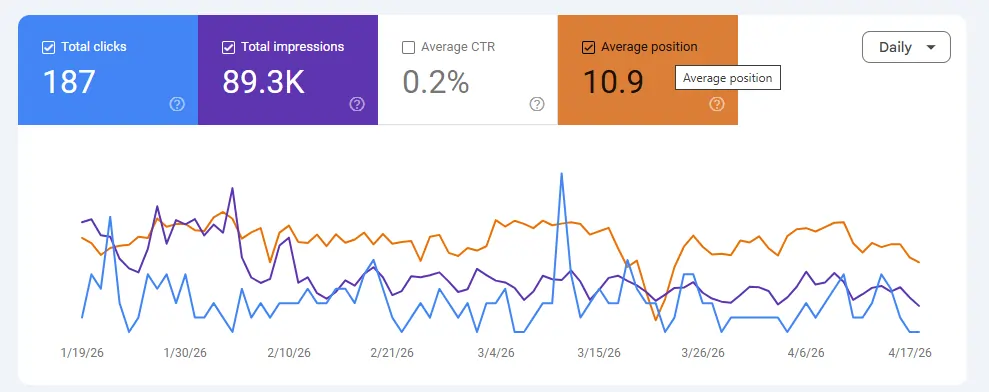
Google Search Console (GSC) helps you monitor your website’s search performance by tracking organic clicks and impressions. You can analyze CTR for individual pages and keywords to see which content drives the most engagement.
GSC also provides page-level insights and information on SERP features, allowing you to optimize your content for rich results and improve overall visibility in search engines.
SEMrush, Ahrefs, Moz
Paid SEO tools like SEMrush, Ahrefs, and Moz provide comprehensive tracking capabilities for your website’s SEO performance. They allow you to monitor keyword rankings, conduct competitor analysis, and track backlink profiles effectively.
Integrating these tools into your reporting workflow helps you consolidate data, visualize trends, and make data-driven decisions to improve your overall SEO strategy and website visibility.
Dash This for Reporting
Dash: This helps consolidate metrics from multiple SEO tools into a single reporting platform. It provides visual dashboards that make it easier to present complex data clearly to stakeholders.
The reporting workflow typically involves three steps: connect your tools, select key performance indicators (KPIs), and generate comprehensive reports. Using DashThis simplifies monitoring SEO performance and ensures actionable insights are easy to interpret.
How Often Should You Track SEO Performance?
Tracking SEO performance at regular intervals helps maintain consistent growth and quickly address issues.
- Weekly: Monitor keyword rankings, detect traffic drops, and identify immediate technical issues.
- Monthly: Review conversions, CTR, and engagement metrics to evaluate overall performance.
- Quarterly: Conduct a deep analysis, perform competitor benchmarking, and adjust your SEO strategy for long-term improvements.
Turning SEO Data into Actionable Insights
Collecting SEO data is only valuable if you turn it into actionable insights. Analyze metrics such as organic traffic, keyword rankings, CTR, bounce rates, and conversions to identify strengths and weaknesses in your SEO strategy.
By combining data from tools like Google Analytics, SEMrush, Ahrefs, and Google Search Console, you can prioritize tasks, optimize underperforming pages, and refine content to align with user intent. To further improve results, explore Discover SEO Growth Strategies that can guide you in implementing effective SEO tactics.
Analyzing Trends to Optimize Your Content
Analyzing SEO trends helps you identify areas for improvement and make data-driven adjustments:
- High Impressions, Low CTR: Optimize your meta titles and descriptions to increase click-through rates.
- High Engagement, Low Conversions: Adjust calls-to-action (CTAs) to better guide users toward desired actions.
- Low Time on Page: Improve content quality and readability to retain visitors and reduce bounce rates.
Identifying Gaps in Your Strategy
Evaluating your SEO performance helps uncover gaps that could be limiting growth:
- Competitor Keyword Opportunities: Identify keywords your competitors rank for but you don’t.
- Content ypes Performing Well: Determine which formats-such as blogs, guides, or videos-drive engagement and conversions.
- Technical Issues Hindering SEO: Detect crawlability, indexing, or speed problems that may affect rankings.
Common SEO Tracking Mistakes to Avoid
Before diving into performance metrics, it’s important to ensure your website is technically sound. Reviewing Comprehensive SEO Audit Tips can help identify hidden issues that may distort your tracking data and overall SEO performance.
Avoiding common SEO tracking mistakes ensures your data is actionable and your strategy remains effective:
- Tracking Too Many Metrics Without Focus: Measuring everything can overwhelm and dilute insights.
- Ignoring Mobile or Core Web Vitals: Mobile performance and page speed are critical for SEO and UX.
- Relying Solely on Branded Traffic: Focusing only on branded queries limits growth potential.
- Not Updating KPI Benchmarks Over Time: SEO evolves; outdated benchmarks can lead to poor decisions.
Conclusion
Consistently tracking and analyzing SEO metrics is essential for maintaining and improving your website’s performance. By leveraging SEO tools and dashboards, you can turn data into actionable insights that inform decisions and optimize your strategy effectively.
Regular monitoring allows you to identify trends, address issues, and refine your approach over time. Implement these practices to optimize, monitor, and continually enhance your SEO strategy, ensuring sustained growth and long-term success in search rankings.
FAQs About SEO Tracking
What is the difference between metrics and KPIs?
Metrics are data points that measure performance (e.g., organic traffic), while KPIs are the most important metrics tied to business goals (e.g., conversions).
How do I know which SEO metrics matter most?
Focus on metrics that impact your traffic, engagement, and conversions, and align with your website’s objectives.
Can I track SEO without paid tools?
Yes, free tools like Google Analytics and Google Search Console provide sufficient insights for small to medium websites.
How long does it take to see results?
SEO improvements can take weeks to months, depending on competition, website authority, and the scale of optimizations.
How do I combine data from multiple tools effectively?
Use reporting platforms or dashboards (e.g., DashThis) to consolidate data, visualize trends, and make actionable decisions.