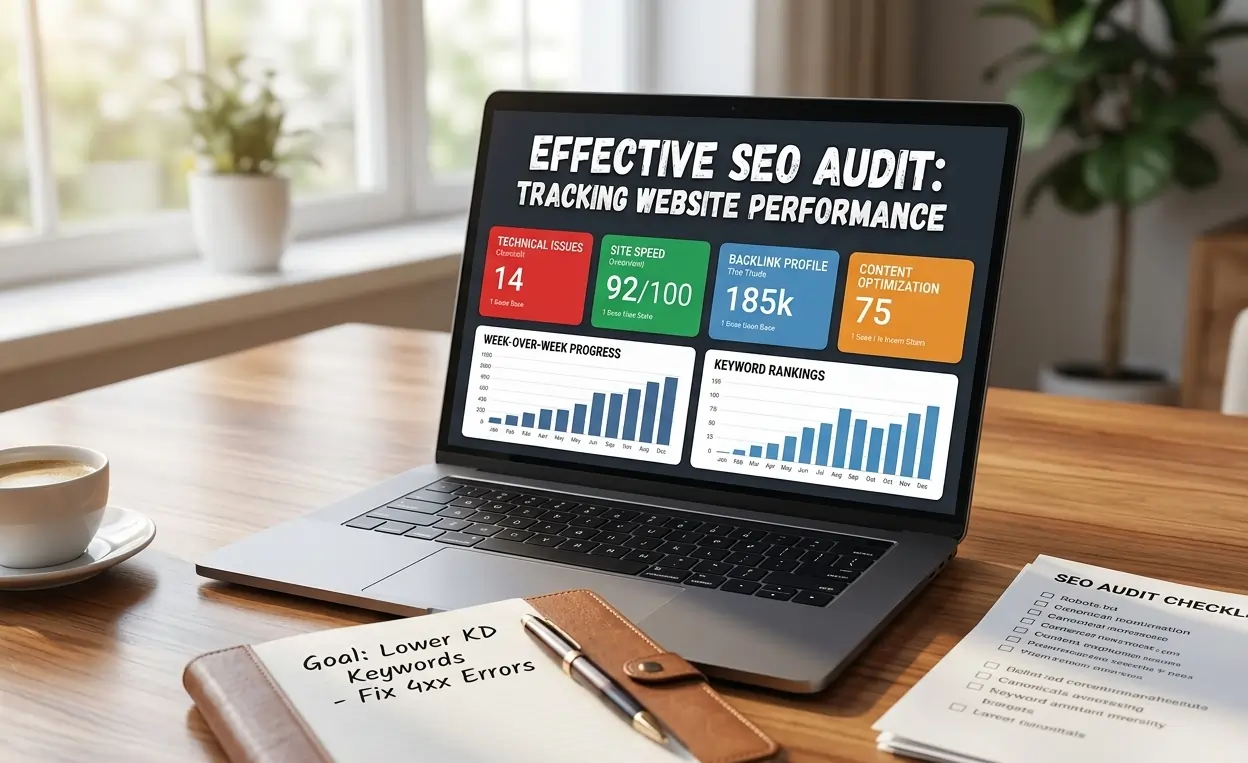

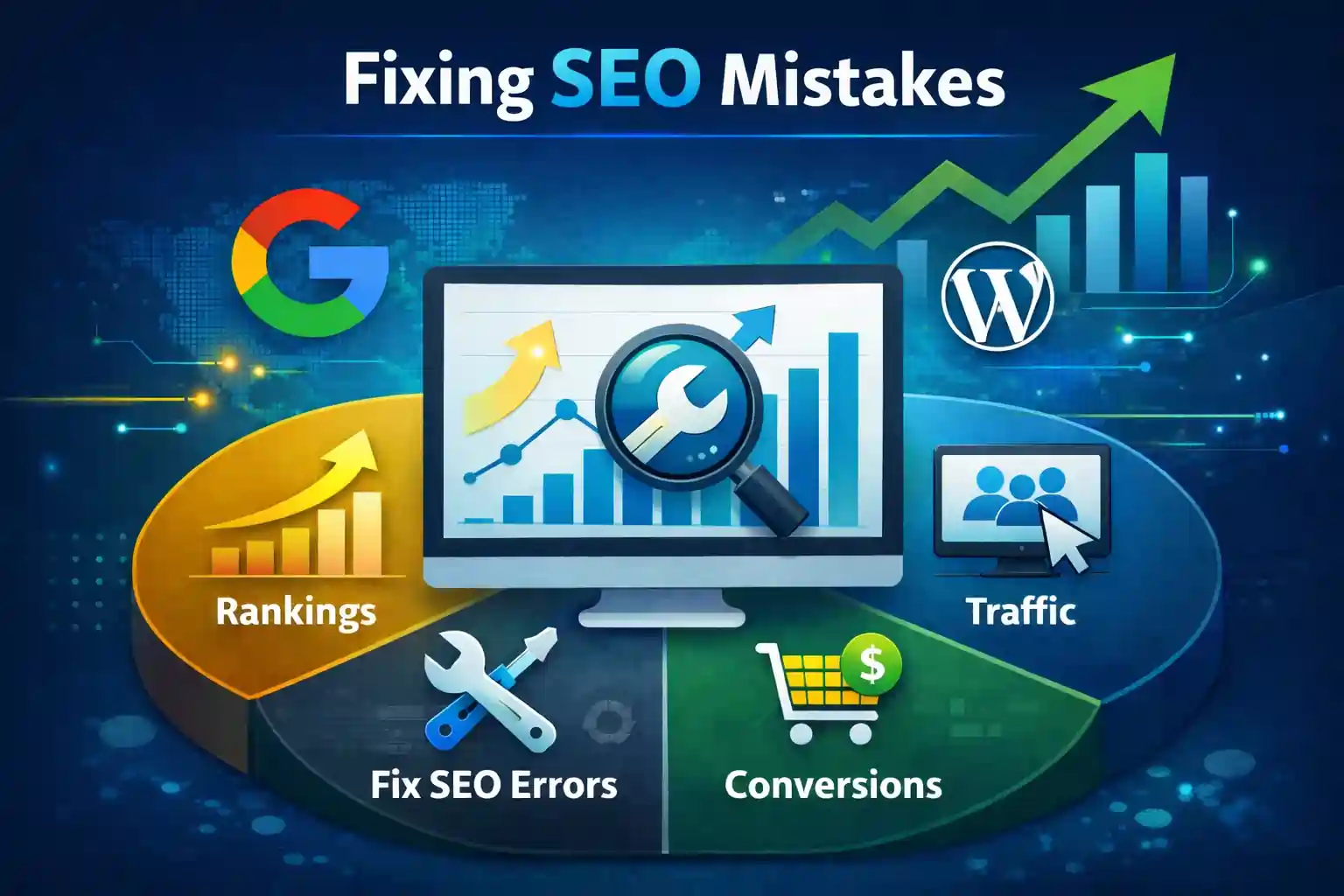
Learn how to identify and fix common SEO mistakes in 2026 to improve your website’s rankings, traffic, and conversions. This guide covers key technical and on-page issues, practical strategies, and essential tools like Google and WordPress. Discover how to address SEO errors, avoid website SEO issues, and enhance your site’s performance for both users and search engines.
Table of Contents:
- How to Identify and Fix Common SEO Mistakes on Your Website
- Why Identifying SEO Mistakes Can Boost Your Traffic & Revenue?
- Top Technical SEO Mistakes and How to Fix Them
- Common On-Page SEO Mistakes You Must Avoid
- Keyword Targeting & Content Strategy Mistakes
- Backlink & Off-Page SEO Mistakes
- User Experience, Mobile & Engagement Mistakes
- Continuous SEO Improvement: Don’t Stop at Fixing
- Quick SEO Checklist: Fix All Common SEO Mistakes Fast
- Tools & Resources for a Complete SEO Audit
- FAQs: Common Questions About SEO Mistakes
- Conclusion: Prevent SEO Mistakes & Rank Higher
Why Identifying SEO Mistakes Can Boost Your Traffic & Revenue?
Identifying and fixing SEO mistakes helps your website rank higher, attract more visitors, and convert traffic into revenue. By understanding common errors and addressing website SEO issues, businesses can improve both user experience and search engine visibility. This ensures pages are properly indexed, crawlable, and recognised as valuable content.
How Do SEO Errors Affect Rankings?
Poor SEO practices, such as missing meta tags, broken links, or slow page speed, can significantly hurt Google rankings. SEO errors and website SEO issues reduce visibility in search results, lower organic traffic, and decrease engagement. Avoiding these SEO blunders ensures your pages are correctly indexed, crawlable, and recognised as relevant by search engines, improving your overall site authority.
What Business Benefits Come From Fixing SEO Mistakes
Correcting SEO mistakes leads to measurable outcomes:
- Increased organic traffic due to better rankings
- Higher click-through rates (CTR) from optimised titles and meta descriptions
- Improved conversions from faster, user-friendly websites
Addressing common SEO errors also strengthens brand credibility and enhances user experience, translating directly into revenue growth.
Quick Stats: Common SEO Issues & Their Impact
Research shows:
- 65% of websites have critical SEO errors affecting performance.
- Sites with optimised page speed see up to 40% higher conversions.
- Broken links and misconfigured redirects can reduce traffic by 15–20%.
Tools like Google Search Console and platforms like WordPress help identify and fix these issues. For professional help improving your website SEO, check our [SEO Services Page].
Top Technical SEO Mistakes and How to Fix Them
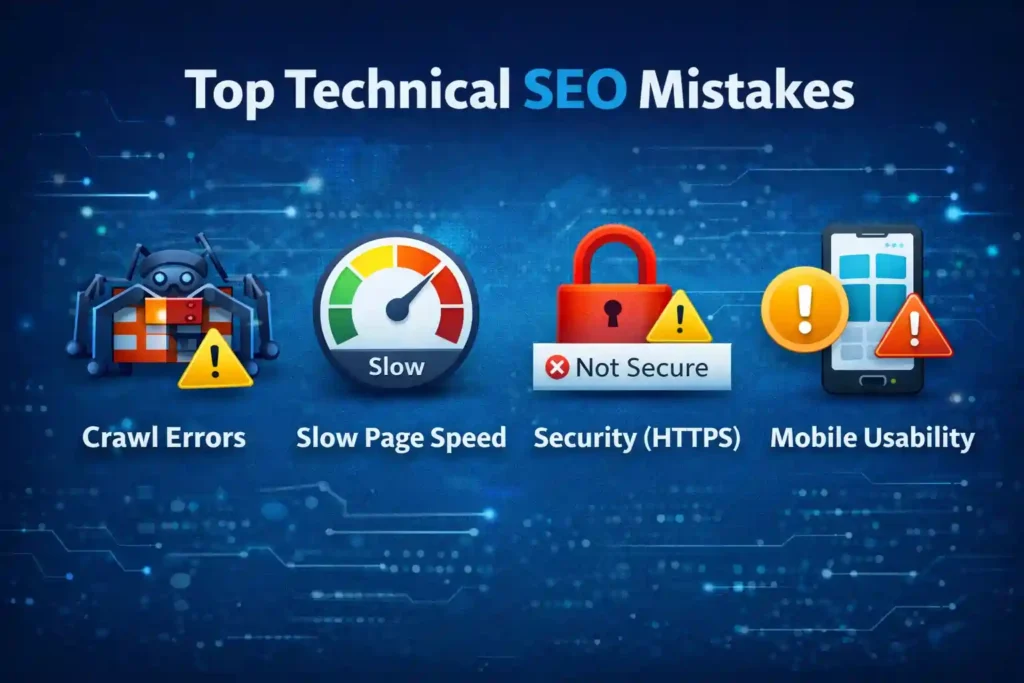
Technical SEO issues can significantly impact your website’s visibility, rankings, and user experience. Identifying and fixing problems like crawlability errors, slow page speed, security flaws, and mobile usability mistakes ensures your site performs well on search engines and provides a smooth experience for visitors. Discover our full range of website solutions to explore common technical SEO errors and practical ways to fix them.
Are Crawlability & Indexing Issues Hurting Your Site?
Check the following to ensure search engines can access your content:
- Verify robots.txt and XML sitemaps are correct
- Fix noindex mishaps on important pages.
- Identify crawl errors using Google Search Console
Proper crawlability ensures pages are indexed and rankable, avoiding hidden website SEO issues.
Is Your Page Speed Slowing Traffic?
Slow websites drive visitors away and reduce rankings. Fix this by:
- Optimising images (ALT text + compression)
- Minifying CSS and JavaScript files
- Using caching and CDNs to reduce load time
Check tools like GTmetrix and PageSpeed Insights for actionable recommendations.
How Secure is Your Website? (HTTPS & Security)
Ensure your website uses SSL certificates and follows security best practices. Poor security can lower rankings, harm user trust, and even lead to penalties from search engines.
Are Canonicalization or Broken Redirects Confusing Google?
Misconfigured canonical tags or 301 redirects can confuse search engines, causing duplicate content issues or lost link equity. Review and fix canonicalization and broken redirects to maintain proper SEO structure.
Mobile-First Optimisation Mistakes
Mobile usability is critical. Common mistakes include:
- Non-responsive design
- Ignoring Core Web Vitals
Common On-Page SEO Mistakes You Must Avoid
On-page SEO is essential for helping search engines understand your website content and improving user experience. Common mistakes like poorly optimised title tags, meta descriptions, headings, URL structure, images, and internal linking can hurt rankings and traffic. This section explains the most frequent on-page SEO errors and actionable tips to fix them effectively.
Are Your Title Tags & Meta Descriptions Optimised?
Many websites make title tag mistakes or meta tag mistakes that hurt SEO. Optimising these elements is essential for click-through rates and search rankings.
Checklist for optimisation:
- Include primary keywords + LSI terms naturally
- Maintain ideal character length (50–60 for titles, 150–160 for meta descriptions)
- Generate AI-friendly meta suggestions to improve relevance.
Properly crafted titles and meta descriptions increase visibility and help search engines understand your content better.
Headers (H1/H2/H3) Mistakes & How to Fix Them.
Incorrect heading usage can confuse search engines and users. Avoid skipping heading hierarchy, duplicate H1S, or missing keywords. Ensure headings are descriptive, include relevant keywords/LSI terms, and follow H1, H2, H3 structure.
URL Structure Problems That Confuse Google
Poor URL structure impacts indexing and user experience. Ensure URLs:
- Are concise and descriptive
- Include primary keywords naturally.
- Avoid unnecessary parameters or symbols
A clean URL structure makes your pages easier to crawl and improves SEO.
Image SEO Errors
Images are crucial for both SEO and UX. Common mistakes include:
- Missing ALT text describing the image
- Oversized images are slowing down page speed.
- Broken images affecting credibility
Optimising images improves rankings, page speed, and accessibility.
Internal Linking Mistakes
Internal links guide users and distribute link equity. Avoid mistakes like missing or irrelevant links. Best practices:
- Link to relevant pages individually. For example, link to SEO Basics for Beginners, where you discuss titles and meta optimisation.
- Link to the Effective SEO Audit, where you cover fixing technical and on-page issues.
Use descriptive anchor texts to explain the linked page content naturally.
Thin or Duplicate Content Issues
Thin or duplicate content offers little value to users and can harm rankings. Focus on:
- Writing original, in-depth content
- Avoiding copy-paste duplication
- Regularly updating outdated content to maintain relevance.
Keyword Targeting & Content Strategy Mistakes
Choosing the right keywords and aligning your content strategy is critical for attracting the right audience. Mistakes like targeting the wrong keywords, missing long-tail or local terms, and ignoring search intent can reduce traffic and conversions. This section highlights common keyword and content strategy errors and actionable ways to fix them, including optimising for the local location of Pakistan, where relevant.
Are You Using the Wrong Keywords?
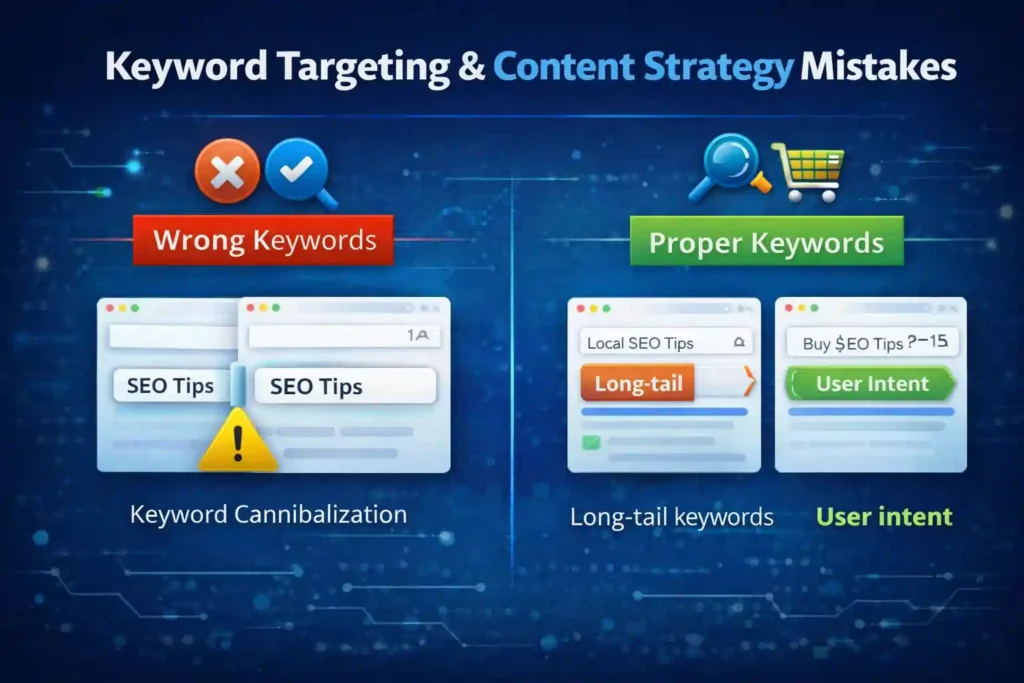
Wrong keyword targeting reduces traffic and leads to missed opportunities. Common mistakes include keyword cannibalisation, where multiple pages compete for the same keyword, missing long-tail & local keywords (e.g., targeting local location Pakistan), and not aligning keywords with user intent, as explained in Google’s Search Engine Optimisation (SEO) Starter Guide. Correcting these errors ensures your content reaches the right audience and improves rankings, engagement, and conversions.
Is Your Content Aligned With Search Intent?
Content must satisfy what users are searching for. Misaligned content leads to high bounce rates and lower rankings. To fix this:
- Identify informational, transactional, or navigational intent for each page
- Align content format and depth with user needs
- Use clear headings, bullet points, and examples to satisfy intent
Regularly update content to match evolving search trends
Properly aligned content improves user engagement, dwell time, and SEO performance, helping your website rank higher in search results
Content Quality & EEAT Mistakes
Low-quality content affects trust and rankings. Focus on:
- Providing original and relevant content
- Showing expertise, authoritativeness, and trustworthiness (EEAT)
- Updating outdated content regularly to keep it accurate.
Backlink & Off-Page SEO Mistakes
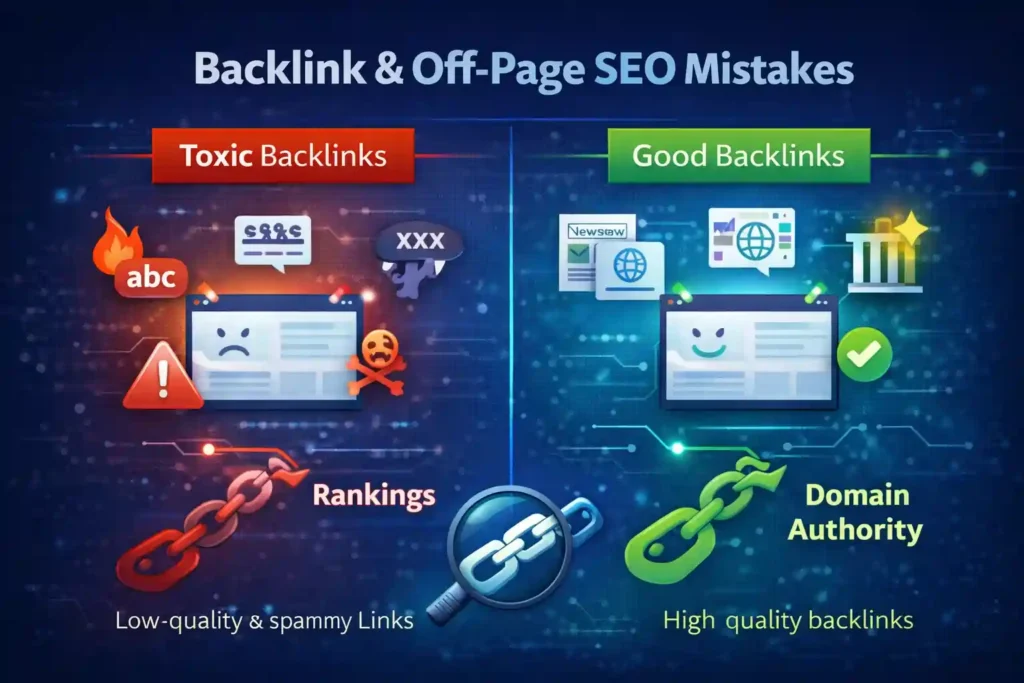
Off-page SEO, including backlinks, significantly impacts your website’s authority, rankings, and organic traffic. Poor-quality or insufficient backlinks can harm your site’s credibility, while high-quality links from authoritative sources improve visibility and domain authority. This section explains the most common backlink and off-page SEO mistakes and provides actionable steps to fix them effectively.
Are Bad Backlinks Hurting Your Rankings?
Low-quality or spammy backlinks can harm your website’s authority and rankings. Search engines like Google evaluate backlink quality to determine trustworthiness. Toxic links from irrelevant or spam domains can trigger penalties and reduce organic traffic, especially for websites targeting competitive niches or local location Pakistan search queries.
Not Building Enough High-Quality Backlinks?
Many websites fail to invest in quality backlink building. Focus on:
- Guest posting on authoritative blogs
- Digital PR and brand mentions
- Partnerships with industry-relevant websites
High-quality backlinks improve domain authority, rankings, and referral traffic.
How to Monitor & Prune Toxic Links?
Use professional SEO tools to monitor backlinks and remove harmful links:
- Ahrefs for backlink analysis and audits
- SEMrush for toxic link detection and disavow files
Regular backlink monitoring prevents SEO penalties and maintains your site’s credibility.
User Experience, Mobile & Engagement Mistakes
User experience (UX) plays a major role in SEO and conversions. A website that is slow, hard to navigate, or not mobile-friendly can increase bounce rates and reduce rankings. Improving usability, mobile performance, and engagement signals helps search engines, and users trust your site more.
Poor Mobile UX Affecting Rankings?
Mobile-first indexing means Google prioritises mobile experience. Poor mobile UX, slow load times, or broken layouts can reduce rankings and user engagement. Optimise responsive design, improve Core Web Vitals, and test mobile usability to retain visitors and increase conversions.
Calls-to-Action That Don’t Convert
Weak or unclear CTAs reduce conversions. Use clear, action-oriented CTAs like “Get a Free SEO Audit” or “Contact Our SEO Experts.” Place CTAs strategically on high-traffic pages to guide users toward conversions and business goals.
Internal Navigation Mistakes
Confusing navigation makes it hard for users and search engines to find content. Improve navigation by:
- Using clear menus and breadcrumb navigation
- Linking important pages internally
- Avoiding broken or hidden navigation elements
Better navigation improves user engagement and SEO performance.
Accessibility Mistakes to Fix
Accessibility issues reduce usability and SEO performance. Reach out for personalised support if you need assistance. Fix:
- Missing ALT text for images
- Poor contrast and unreadable fonts
- Non-descriptive link text
Continuous SEO Improvement: Don’t Stop at Fixing
Fixing SEO mistakes is not a one-time task. SEO requires continuous monitoring, optimisation, and updates to maintain rankings, traffic, and conversions. Regular improvements help your website stay competitive and adapt to search engine changes.
How to Monitor Your SEO Progress?
SEO is ongoing. Track rankings, traffic, and conversions regularly. Use dashboards and reports to measure progress and identify new website SEO issues before they impact performance.
Using Analytics & AI Tools for Continuous Optimisation
Use data-driven tools to improve SEO performance:
- Google Analytics for traffic and behavior insights
- Google Search Console for indexing and performance data
- AI SEO tools for content optimisation and keyword insights
Continuous optimisation keeps your website competitive in 2026 and beyond.
How to Stay Updated With Google Algorithm Changes?
Google updates its algorithm frequently. Follow official Google blogs, SEO communities, and trusted industry experts to stay informed. Regular audits and updates help you avoid sudden ranking drops and maintain consistent growth.
Quick SEO Checklist: Fix All Common SEO Mistakes Fast
This quick SEO checklist helps you identify and fix common SEO mistakes efficiently. By following these steps, you can improve website rankings, increase organic traffic, and enhance user experience. Use this checklist as a practical guide to audit technical SEO, on-page optimisation, content strategy, backlinks, and mobile performance for better search visibility.
Use this checklist to improve your SEO quickly:
- Technical SEO fixes: Improve crawlability, page speed, HTTPS, and mobile optimisation
- On-page SEO fixes: Optimise titles, meta descriptions, headings, URLs, and images
- Content & keyword fixes: Align content with search intent and use long-tail and local keywords naturally
- Backlink monitoring: Build quality backlinks and remove toxic links
- UX & mobile fixes: Improve navigation, CTAs, and accessibility
Tools & Resources for a Complete SEO Audit
Using the right tools helps you identify SEO errors, website SEO issues, and technical problems quickly. These tools provide insights into rankings, backlinks, performance, and content optimisation.
Recommended SEO audit tools:
- SEMrush, Ahrefs, Screaming Frog: For technical SEO audits, backlinks, and site crawling
- GTmetrix, PageSpeed Insights: For page speed, Core Web Vitals, and performance analysis
- Yoast SEO / WordPress plugins: For on-page SEO optimisation and content checks
These tools help you fix SEO blunders efficiently and maintain long-term performance.
Conclusion: Prevent SEO Mistakes & Rank Higher
Preventing SEO mistakes is crucial to maintaining higher search rankings, increasing organic traffic, and boosting conversions. By addressing technical issues, optimising on-page elements, improving content strategy, and monitoring backlinks and user experience, website owners can ensure long-term SEO success and stay ahead of competitors.
Summary of Key Takeaways.
Fixing common SEO mistakes is essential for better rankings, traffic, and conversions. Focus on technical SEO, on-page optimisation, keyword strategy, backlinks, and user experience. Use professional tools and follow best practices to avoid website SEO issues and maintain long-term growth.
Next Steps for Your Website SEO.
Start with a complete SEO audit, fix technical and on-page issues, and update your content strategy. Monitor performance using analytics tools and stay updated with Google algorithm changes. Continuous optimisation ensures sustainable growth, especially for competitive and local search markets.
FAQs: Common Questions About SEO Mistakes
This section covers frequently asked questions about common SEO mistakes. It helps users understand what errors beginners often make, how SEO issues affect traffic and revenue, which tools are best for audits, and how often to review their website. Following these insights ensures better rankings, improved user engagement, and more effective SEO strategies.
What Are the Most Common SEO Mistakes Beginners Make?
Beginners often ignore keyword research, misuse headings, forget meta tags, and publish thin content. Technical SEO errors like slow page speed and missing SSL are also common. Avoiding these mistakes helps improve rankings and organic traffic quickly.
How Long Does It Take to See Results After Fixing SEO Mistakes?
SEO results usually appear within 4-12 weeks, depending on competition, site authority, and fixes implemented. Technical fixes can show faster results, while content and backlink improvements take longer to impact rankings and traffic.
Which Tools Are Best for Identifying SEO Errors?
Popular tools include Google Search Console, Google Analytics, Ahrefs, SEMrush, Screaming Frog, and GTmetrix. These tools help detect crawl errors, performance issues, keyword gaps, and backlink problems effectively.
Can Poor SEO Really Affect My Website Traffic & Revenue?
Yes, poor SEO reduces rankings, visibility, and user engagement. This leads to lower organic traffic, fewer leads, and reduced conversions. Fixing SEO errors improves CTR, conversions, and overall revenue growth.
How Often Should I Audit My Website for SEO Issues?
Conduct a full SEO audit every 3-6 months and monitor key metrics monthly. Regular audits help detect new SEO errors, algorithm impacts, and technical issues before they affect rankings and traffic.