

SEO Tools help website owners improve search engine rankings, optimize content, and grow traffic effectively. By using platforms like Google Analytics, Google Search Console, Ahrefs, and SEMrush, you can discover high-value keywords, monitor competitors, audit your website, and track content performance. Beginners and advanced users alike can make data-driven decisions, enhance user experience, and streamline optimization processes to boost online visibility and authority.
Table of Contents
- What Are SEO Tools and Why Do They Matter?
- How to Conduct Effective Keyword Research?
- On-Page and Technical SEO Tools You Need
- Content Optimization & Marketing Tools
- Tracking SEO Performance Effectively
- FAQs About Using SEO Tools
- Conclusion
What Are SEO Tools and Why Do They Matter?
Businesses today face heavy online competition. SEO tools act as a backbone for digital marketing strategies by providing insights into keywords, content performance, and competitor activities. SEO tools are digital tools that increase online visibility and achieve better search engine rankings. They allow you to identify top-performing keywords, optimize content and site structure, monitor competitors and backlinks, and measure traffic and conversions effectively. For those starting, it’s essential to first explore SEO basics for beginners so you understand the fundamentals of keyword research, on-page SEO, and technical optimizations before diving into advanced tools.
Benefits of Using SEO Tools
- Identify top-performing keywords to target high-value search terms and attract qualified traffic.
- Optimize content, meta tags, headers, and overall site structure to enhance user experience and boost search engine visibility.
- Track competitor strategies and monitor backlink profiles to stay ahead in your niche.
- Measure traffic, rankings, and conversion performance to make data-driven decisions.
How to Conduct Effective Keyword Research?
Keyword research is the foundation of any successful SEO strategy. By understanding what users are searching for, businesses can align their content with user intent and attract targeted traffic. Using the right SEO Tools allows you to uncover search patterns, competitor strategies, and keyword opportunities that drive results.
Why Keywords Are the Foundation of SEO
Keywords act as a bridge between your content and what users type into search engines. By understanding user intent and analyzing search queries, you can create content that directly answers audience needs, improves relevance, and boosts rankings. SEO Tools help identify these opportunities efficiently, so your content matches real user search intent.
Best Keyword Research Tools
Several tools help you find the right keywords for your website:
- Google Keyword Planner provides search volume, competition data, and keyword suggestions for free.
- Paid platforms like Ahrefs, SEMrush, and Ubersuggest offer advanced analytics, competitor keyword insights, and trend tracking.
Key Things to Analyze:
- Long-tail vs short-tail keywords
- Competitor keyword strategies
- Search volume and keyword difficulty
Step-by-Step Keyword Selection Process
Start by analyzing search volume, competition, and relevance using SEO Tools. Prioritize keywords that match audience intent and your business goals. After selecting your target keywords, it’s essential to perform an effective SEO audit to identify gaps in content, site structure, and optimization opportunities before publishing. Regular audits ensure your website remains competitive and aligned with search engine best practices.
On-Page and Technical SEO Tools You Need
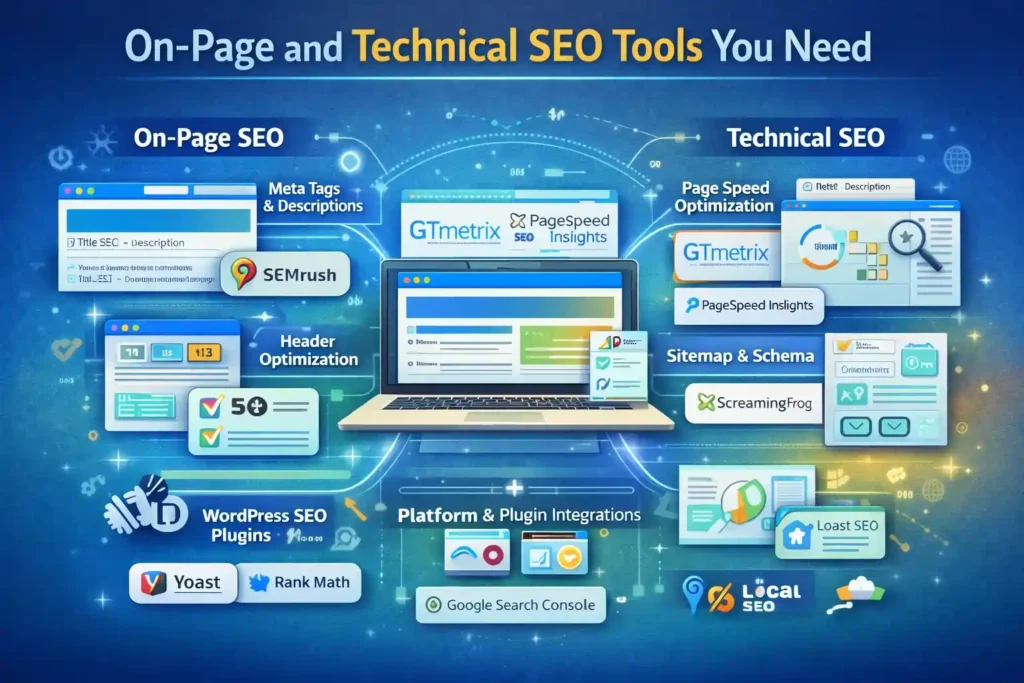
Optimizing your website requires both on-page and technical SEO tools. These platforms help improve content quality, site structure, and user experience, which ultimately boost search engine rankings. Using the right tools ensures errors are identified, optimizations are tracked, and performance is measured effectively.
Tools for On-Page Optimization
On-page SEO focuses on optimizing individual pages to improve rankings and user experience. Key areas include:
- Meta tags & descriptions (tools like Yoast SEO, SEMrush)
- Header optimization and image alt text
- Internal linking to strengthen site structure and navigation
To ensure these optimizations are effective, you can track and measure your SEO performance throughout your website using advanced analytics tools.
Technical SEO Software
Technical SEO tools help fix backend issues and improve search engine crawling and indexing:
- Page speed optimization tools (e.g., GTmetrix, PageSpeed Insights)
- Sitemap generators and schema markup tools
- Website crawl and error detection: Screaming Frog SEO Spider
Platform & Plugin Integrations
Many platforms and plugins simplify SEO management:
- WordPress SEO plugins like Yoast SEO and Rank Math
- Google Search Console and Google Analytics for monitoring performance
- E-commerce and local SEO tools to optimize product pages and location-based content
Content Optimization & Marketing Tools
Publishing high-quality, SEO-friendly content is important for attracting traffic and building authority. Content optimization tools help you analyze, refine, and distribute your content effectively, ensuring it aligns with user intent and search engine guidelines.
Tools for Creating SEO-Friendly Content
Several tools make content creation and optimization easier:
- Keyword suggestion tools and SEO analytics software to identify target terms
- Content optimization and SEO reporting platforms to improve on-page SEO
- Marketing SEO apps for distributing content and tracking performance across channels
How to Build Authority Through Content
Building authority involves linking to trusted, authoritative sources and encouraging backlinks naturally. Using your own website’s resources strategically also strengthens SEO. For example, you can integrate some practical advice from the website to enhance content value and provide users with actionable guidance. Adding relevant case studies or examples in content further boosts credibility.
Tracking SEO Performance Effectively
Monitoring SEO performance is essential to maintain and improve your website’s rankings. SEO Tools help track progress, identify issues, and make data-driven decisions that increase traffic, engagement, and conversions.
Rank Tracking and Backlink Analysis
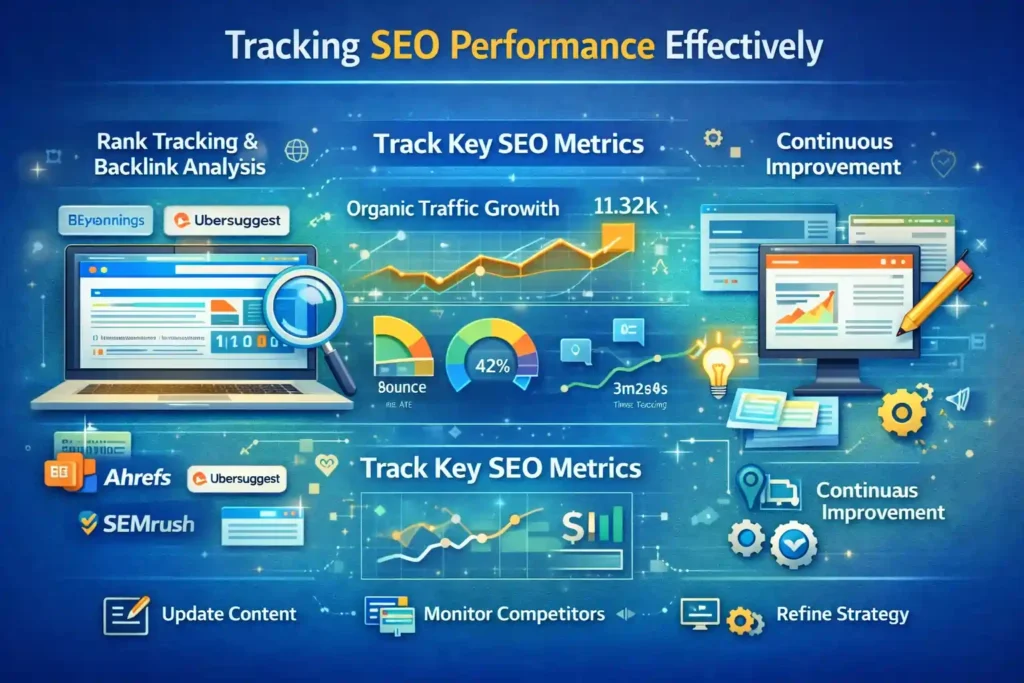
Use tools like Ahrefs, SEMrush, and Ubersuggest to monitor your website’s rankings and backlink profile. These tools highlight strengths, weaknesses, and opportunities, so you can refine your strategy and outperform competitors.
Metrics That Matter
Measuring key SEO metrics is essential to understanding how well your website is performing. Focus on aspects like organic traffic growth, bounce rate and average time on page, and conversion tracking to evaluate your success. For actionable strategies and guidance, check out expert insights from our team to see how your website performance can improve.
Continuous Improvement
SEO is an ongoing process. Regularly update content, monitor competitor activity, and refine your strategies based on performance data. For personalized assistance, you can get in touch with our team for SEO support to receive expert guidance tailored to your website.
Conclusion
SEO Tools are essential for saving time and making data-driven decisions that improve website performance. By combining on-page, technical, and content SEO strategies, you can significantly boost search engine rankings and user engagement. Beginners should start by using Google Keyword Planner to research relevant keywords and implement internal linking strategies, then gradually scale to more advanced SEO Tools and analytics platforms to optimize every aspect of their website. Regularly updating content, analyzing performance, and leveraging multiple tools ensures long-term SEO success.
FAQs About Using SEO Tools
Here are the most common questions about using SEO Tools, answered to help beginners and advanced users improve website performance and make data-driven decisions.
Which SEO Tool is Best for Beginners?
For beginners, it’s best to start with Google Keyword Planner along with free WordPress plugins like Yoast SEO or Rank Math. These tools help you find target keywords, analyze search volume, and optimize your content easily without requiring advanced skills.
Can I Rely Only on Free Tools?
Free SEO Tools are great for starting, but advanced SEO strategies require paid tools like Ahrefs and SEMrush for in-depth keyword analysis, backlink tracking, and competitor insights. Using a mix of free and premium tools ensures your strategy is both cost-effective and comprehensive.
How Often Should I Check SEO Performance?
Weekly: Monitor technical issues and errors on your website
Monthly: Review rankings, traffic metrics, and key performance indicators
For continuous guidance, consider creating a review schedule to track progress consistently.