
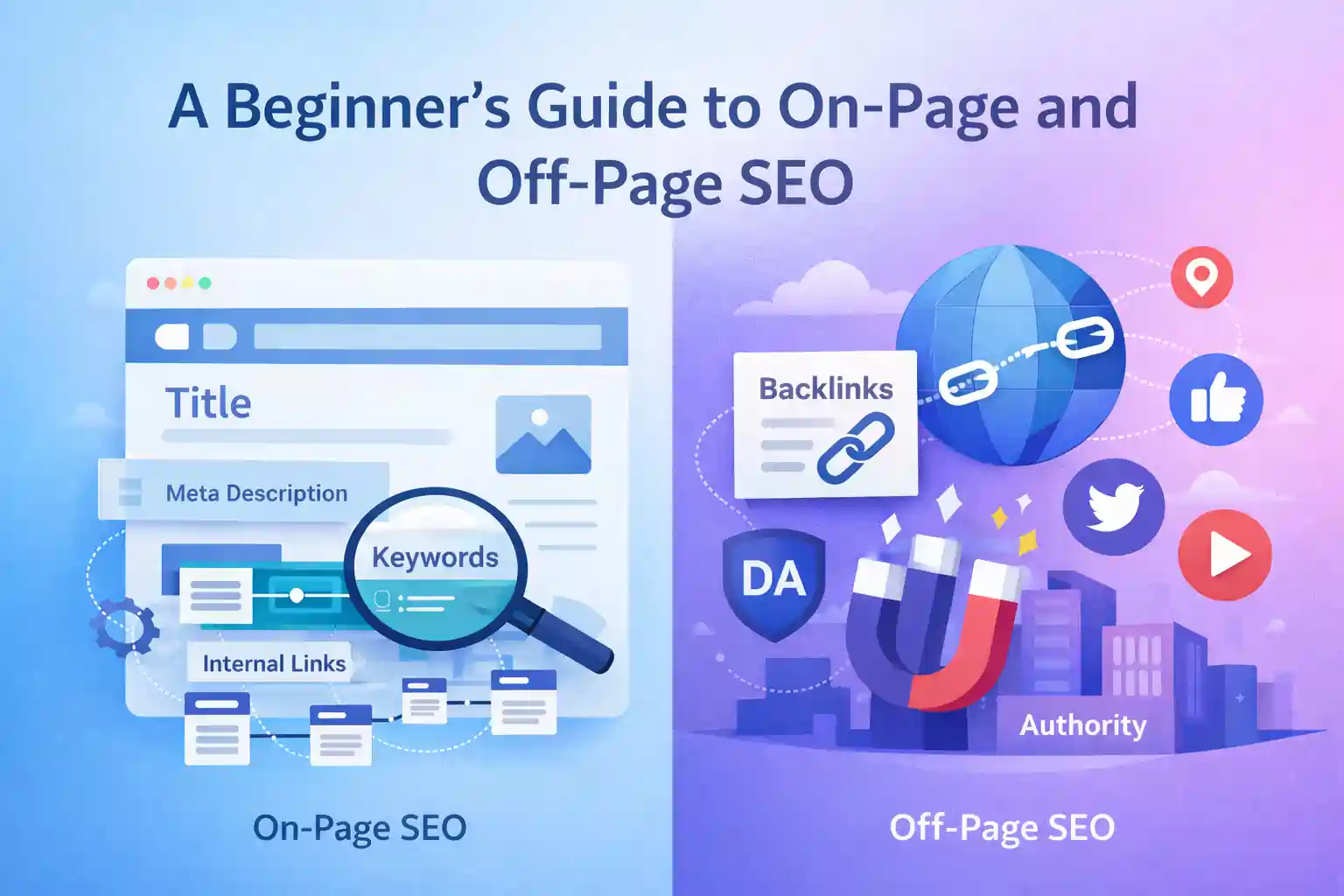
On-Page and Off-Page SEO are essential strategies that help websites rank higher on Google in 2026. On-page SEO focuses on optimizing content, keywords, internal links, and technical elements, while off-page SEO builds authority through backlinks and brand signals. Beginners can boost organic traffic by following step-by-step techniques. This guide includes a checklist, comparison table, recommended tools like Ahrefs and SEMrush, and FAQs to make SEO easier to implement.
Table of Contents
- What Is On-Page and Off-Page SEO and Why Do They Matter in 2026?
- How Does Google Actually Rank Your Website?
- What Is On-Page SEO and How Can You Optimize It Step-by-Step?
- What Is Off-Page SEO and How Does It Build Authority?
- On-Page vs Off-Page vs Technical SEO: What’s the Real Difference?
- What Is Technical SEO and Why Is It Critical for Long-Term Rankings?
- What Is the Ultimate SEO Checklist for Beginners?
- Which SEO Tools Should Beginners Use in 2026?
- What Are the Most Common SEO Mistakes Beginners Make?
- How Long Does SEO Take to Show Results?
- Frequently Asked Questions About On-Page and Off-Page SEO
What Is On-Page and Off-Page SEO and Why Do They Matter in 2026?
Search Engine Optimization (SEO) is the process of improving a website’s visibility on search engines like Google. Google ranks pages by crawling, indexing, and evaluating content against user intent, relevance, and authority. On-Page SEO optimizes content, headings, keywords, internal links, and technical elements. Off-Page SEO focuses on building authority through backlinks, social signals, and brand mentions. Both impact user experience (UX), organic traffic growth, and overall rankings. Understanding these fundamentals is essential for beginners in 2026.
Search intent is critical. Google prioritizes content that answers a user’s query. Combining UX improvements with proper on-page and off-page strategies ensures that higher Google ranking factors are met, increasing visibility and attracting more organic traffic.
How Does Google Actually Rank Your Website?
What Are Crawling, Indexing, and Ranking?
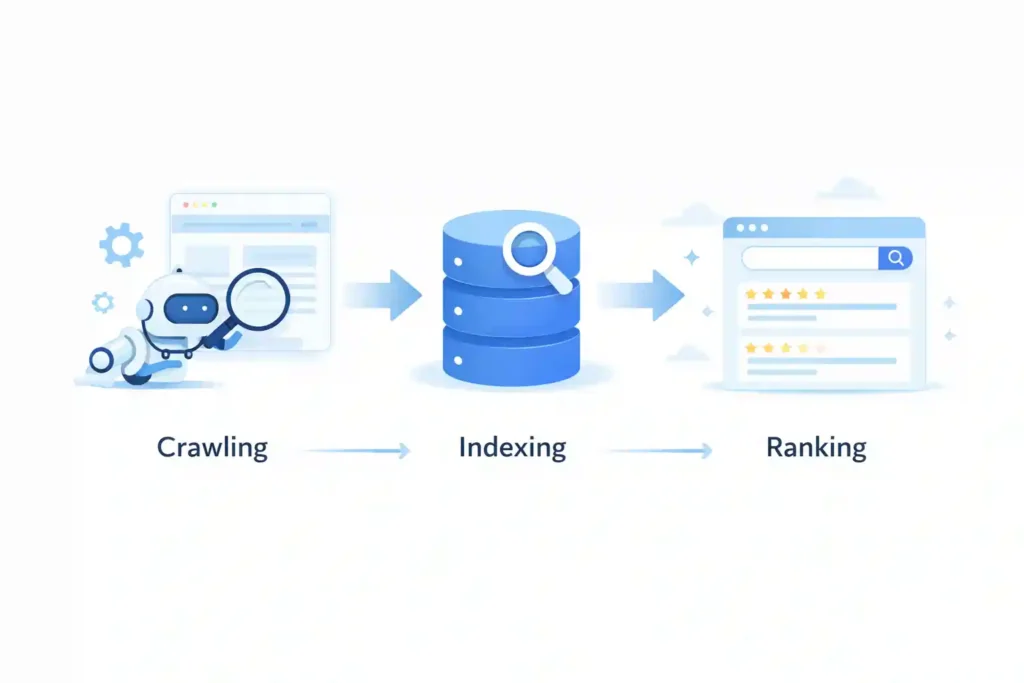
Crawling is how search bots or crawlers discover new content on your website. Tools like XML Sitemaps and Robots.txt help guide crawlers efficiently. A canonical tag avoids duplicate content issues, ensuring Google indexes the correct page. Once crawled, Google indexes your pages to include them in search results. Ranking evaluates relevance, authority, and user signals to determine which pages appear first. Proper on-page SEO and a clear site structure improve crawlability and indexing accuracy.
What Role Do Core Web Vitals and Page Experience Play?
Google emphasizes page experience as a ranking factor. Core Web Vitals measure loading speed, interactivity, and visual stability. Mobile-friendly design ensures accessibility across devices. Secure connections via HTTPS build trust. User engagement signals like bounce rate, dwell time, and click-through rate show how well your content satisfies visitors. Optimizing these elements boosts visibility, improves organic traffic growth, and strengthens both on-page and off-page SEO effectiveness.
What Is On-Page SEO and How Can You Optimize It Step-by-Step?
On-Page SEO refers to all optimizations you make directly on your website to improve rankings and user experience. In 2026, Google values relevant content, clear structure, fast-loading pages, and semantic understanding. Optimizing on-page elements ensures that search engines like Google correctly interpret your content, improving organic traffic and engagement. Following step-by-step strategies helps beginners implement effective SEO systematically.
How Do You Do Keyword Research the Right Way?
Keyword research is the foundation of on-page SEO. Start by understanding search intent and what users are looking for. Use long-tail keywords for higher relevance and lower competition. Group related terms via keyword clustering to organize content topics. Tools like Google Search Console, SEMrush, and Ahrefs make research efficient and accurate.
How Should You Optimize Title Tags and Meta Descriptions?
Title tags should be concise, include the primary keyword, and clearly state the content’s benefit. Keep it under 60 characters. Meta descriptions summarize your page in 150-160 characters, using keywords naturally. Use formulas like “What + How + Benefit” to boost CTR. Optimized titles and descriptions improve both organic traffic and click-through rates on search results.
How Do Heading Tags Improve SEO Structure?
Heading tags (H1, H2, H3) organize content hierarchically. H1 signals the main topic, H2 covers sections, and H3 breaks subtopics. Proper headings improve readability, crawlability, and NLP understanding for Google’s algorithms. Place keywords naturally in headings without stuffing. Well-structured headings help AI-based search systems like Google BERT understand context and relevance.
Why Is Internal Linking Important for Rankings?
Internal linking connects pages within your website, distributing authority and improving crawlability. Use descriptive anchor text that aligns with the linked page’s topic. Strategic linking enhances user navigation and keeps visitors engaged longer. It also signals relevance to search engines, improving rankings for both linked and linking pages. Beginners can start linking blog posts to service pages naturally for maximum impact.
How Do You Optimize URLs and Images Properly?
SEO-friendly URLs are short, descriptive, and include primary keywords. For images, compress files to improve page speed, use ALT text to describe visuals for accessibility and SEO, and implement structured data for enhanced indexing. Optimized URLs and images not only improve page experience but also contribute to higher organic rankings in Google search results.
What Is Off-Page SEO and How Does It Build Authority?
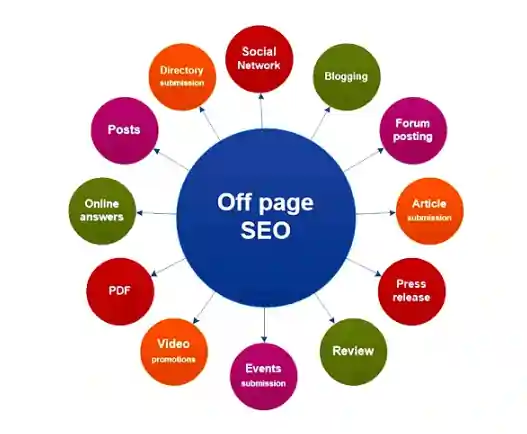
Off-Page SEO includes strategies executed outside your website to improve trust, authority, and rankings. The most common method is acquiring high-quality backlinks from relevant, authoritative sources. Social signals, brand mentions, and guest blogging also strengthen your website’s credibility. Proper off-page SEO signals to search engines like Google that your content is trustworthy and valuable, boosting organic traffic growth over time.
How Do High-Quality Backlinks Improve Rankings?
Backlinks are links from other websites pointing to yours. They act as votes of confidence, signaling domain authority and relevance. Use diverse anchor text to appear natural and avoid spam penalties. Focus on white-hat link-building strategies, including guest posts, resource pages, and PR mentions. High-quality backlinks improve visibility in search results and strengthen your site’s trustworthiness for Google.
Do Social Signals and Brand Mentions Help SEO?
While not direct ranking factors, social engagement and brand mentions enhance visibility and credibility. Influencer collaborations, shares, and mentions without links indicate popularity and trust. Maintaining a strong online reputation across platforms like LinkedIn or Twitter can indirectly support SEO by increasing traffic and referral signals.
How Can Guest Blogging and Outreach Boost Authority?
Guest blogging allows you to publish content on relevant external websites, earning backlinks and expanding reach. Collaborate with influencers, podcasters, and PR platforms to amplify authority. Quality content shared externally positions your brand as an expert and signals trust to search engines. Consistent outreach and collaboration help beginners build both authority and meaningful connections in their niche.
On-Page vs Off-Page vs Technical SEO: What’s the Real Difference?
Understanding the differences between On-Page, Off-Page, and Technical SEO helps beginners prioritize tasks and improve rankings efficiently. Each type focuses on different aspects of optimization but works together for maximum impact on Google search results.
| Factor | On-Page SEO | Off-Page SEO | Technical SEO |
| Control Level | Full control (you manage content, keywords, headings) | Partial control (depends on other sites linking to you) | Full control (site speed, crawlability, structured data) |
| Ranking Impact | Immediate relevance & user experience | Authority and trust signals | Long-term stability and indexing |
| Time to See Results | Weeks to months | Months too long-term | Weeks to months |
| Tools Required | Google Search Console, SEMrush, Ahrefs | Ahrefs, Moz, Outreach tools | Google Search Console, PageSpeed Insights, Screaming Frog |
| Example Tasks | Keyword optimization, internal links, and meta tags | Backlink building, guest posting, brand mentions | XML sitemap, robots.txt, canonical tags, schema markup |
This table helps beginners see where to focus efforts based on control, time, and expected impact.
What Is Technical SEO and Why Is It Critical for Long-Term Rankings?
Technical SEO ensures that search engines can crawl, index, and understand your website properly. While on-page SEO focuses on content and off-page SEO builds authority, technical SEO forms the foundation. Without it, your pages may load slowly, duplicate content may exist, and Google may struggle to index your website. Beginners in 2026 must prioritize technical fixes to maintain long-term organic growth.
What Technical Elements Should Every Beginner Fix First?
- XML Sitemap: Guides search engines through your site structure.
- Robots.txt: Controls which pages crawlers can access.
- Canonical Tags: Prevent duplicate content issues.
- Crawlability & Indexability: Ensure all important pages are discoverable by search bots.
Fixing these basics improves indexing efficiency, reduces errors in Google Search Console, and supports other SEO efforts.
How Do Schema Markup and Structured Data Improve Visibility?
Schema markup and structured data provide context to search engines about your content. Implementing the JSON-LD format helps Google display rich snippets like ratings, events, or FAQs in search results. Properly structured data increases click-through rates, can appear in featured snippets, and enhances visibility in AI-driven search features. Tools like Google Structured Data Testing Tool can verify proper implementation.
What Is the Ultimate SEO Checklist for Beginners?
Beginners often struggle to know where to start with SEO. This ultimate SEO checklist organizes tasks into On-Page, Off-Page, and Technical SEO, making it easy to follow. Completing these steps ensures your website is fully optimized for Google rankings, user experience, and organic traffic growth.
On-Page SEO Checklist
- Keyword research complete: Ensure primary and LSI keywords are identified and aligned with search intent.
- Title optimized: Include primary keyword naturally, under 60 characters.
- Meta description written: Clear, benefit-driven, under 160 characters to boost CTR.
- Internal links added: Use descriptive anchor text to related pages for better crawlability.
- Images optimized: Compressed, ALT text added, structured data implemented.
- Mobile-friendly tested: Confirm responsive design across devices for better UX.
Following this checklist ensures your pages are fully prepared for search engines and readers alike.
Off-Page SEO Checklist
- Backlinks from authority sites: Focus on high-quality links to improve domain authority.
- Guest posts published: Contribute content on niche-relevant sites with contextual backlinks.
- Brand mentions tracked: Monitor mentions across the web to maintain reputation.
- Social shares increased: Engage audiences on platforms like LinkedIn and Twitter for traffic signals.
Off-page SEO signals trust and credibility to search engines, boosting your rankings over time.
Technical SEO Checklist
- HTTPS enabled: Secure your site to protect user data and improve trust signals.
- Page speed optimized: Compress images, leverage caching, and improve loading time.
- Sitemap submitted: Submit XML sitemap in Google Search Console for better crawlability.
- Core Web Vitals passed: Optimize loading, interactivity, and visual stability to meet Google standards.
Technical SEO ensures your website is easy for search engines to crawl, index, and rank efficiently.
Which SEO Tools Should Beginners Use in 2026?
Using the right tools makes SEO simpler and more effective. Here are essential tools for beginners:
- Google Search Console: Monitor indexing, identify crawl errors, and track search performance.
- Google Analytics: Analyze traffic, user behaviour, and conversions.
- Ahrefs: Conduct backlink analysis, competitor research, and keyword tracking.
- SEMrush: Perform site audits, keyword research, and monitor rankings.
- Screaming Frog: Crawl websites to identify technical issues, broken links, and duplicate content.
Beginners can combine these tools to cover on-page, off-page, and technical SEO effectively, ensuring faster and more accurate results.
What Are the Most Common SEO Mistakes Beginners Make?
Beginners often make SEO errors that slow down ranking progress. Keyword stuffing can harm readability and trigger Google penalties. Ignoring mobile optimization leads to a poor user experience on smartphones and tablets. Weak internal linking prevents proper crawlability and authority flow. Low-quality backlinks from spammy sites reduce credibility. Duplicate content confuses search engines, and ignoring Core Web Vitals negatively impacts page experience. Avoiding these mistakes ensures stronger rankings and sustainable organic traffic growth.
How Long Does SEO Take to Show Results?
SEO is a long-term strategy, and results vary. Typically, beginners see noticeable improvements in 3-6 months, but highly competitive niches may take longer. Factors affecting ranking include content quality, backlink authority, technical SEO, and user engagement metrics. Organic traffic growth is gradual, and consistent effort in on-page, off-page, and technical SEO ensures steady improvement. Patience and regular monitoring using tools like Google Analytics and Google Search Console are essential for success.
Conclusion
On-Page, Off-Page, and Technical SEO work together to help your website rank higher on Google in 2026. By optimizing content, headings, keywords, internal links, and technical elements, and building authority through backlinks and brand signals, beginners can steadily increase organic traffic. Following step-by-step strategies, using tools like Google Search Console, Ahrefs, and SEMrush, and tracking performance ensures long-term results.
Frequently Asked Questions About On-Page and Off-Page SEO
What is the difference between On-Page and Off-Page SEO?
On-Page SEO involves optimizing elements within your website, such as content, headings, keywords, images, and internal links. Off-Page SEO focuses on building your website’s authority through backlinks, social signals, and brand mentions. Both work together on-page improves relevance and user experience, while off-page boosts credibility and trust for better Google rankings.
Is Off-Page SEO more important than On-Page SEO?
Neither is inherently more important; they complement each other. On-page SEO ensures your content is optimized and user-friendly, while off-page SEO builds authority and signals trust to Google. Beginners should focus on balancing both strategies to achieve sustainable organic traffic growth rather than prioritizing one over the other.
Do meta keywords still matter?
No, meta keywords no longer affect Google rankings. Search engines now rely on content relevance, headings, structured data, and NLP-based algorithms to evaluate pages. Beginners should focus on optimizing meta titles, meta descriptions, and on-page content rather than adding meta keywords.
What is Technical SEO in simple terms?
Technical SEO ensures that search engines can crawl, index, and understand your website effectively. It includes optimizing site speed, mobile-friendliness, HTTPS security, XML sitemaps, robots.txt, canonical tags, and Core Web Vitals. Technical SEO forms the foundation that supports both on-page and off-page efforts.
How can I rank on Google faster?
To rank faster, beginners should combine on-page SEO, off-page SEO, and technical SEO. Focus on:
Creating high-quality, relevant content
Optimizing headings, meta tags, and URLs
Building high-authority backlinks
Improving page speed and mobile experience
Use tools like Google Search Console and Ahrefs to monitor performance and adjust strategies regularly.